
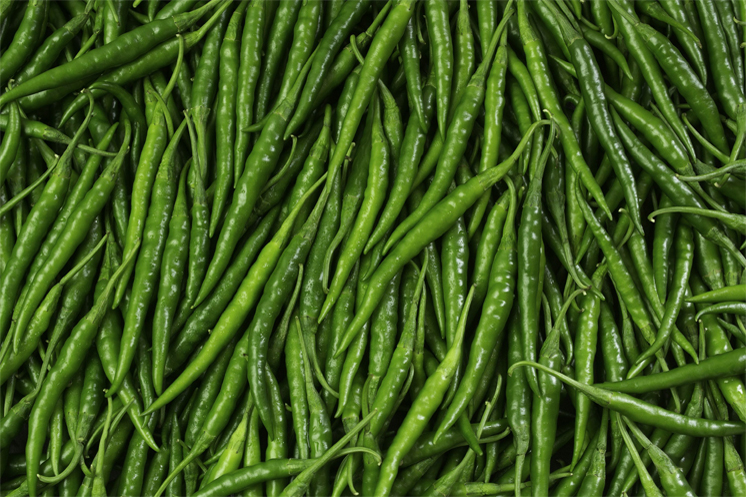
Green chilli (Capsicum annuum or Capsicum frutescens) is a widely used spice and vegetable known for its pungent flavor, vibrant green color, and rich nutritional profile. It is an unripe form of red chilli and belongs to the Solanaceae (nightshade) family, which also includes tomatoes and potatoes. Green chillies are native to Central and South America but are now cultivated extensively across Asia, particularly in India, Thailand, and China, as well as in parts of Africa and Latin America. They thrive in warm climates with well-drained soil and abundant sunlight. The characteristic heat of green chillies comes from a compound called capsaicin, which stimulates nerve endings and is responsible for their spiciness. Nutritionally, green chillies are low in calories and rich in vitamins A, C, and K, along with antioxidants that help boost immunity, improve metabolism, and promote healthy skin.
They also contain dietary fiber, iron, and potassium, contributing to digestive health and cardiovascular function. In culinary use, green chillies are highly versatile — they can be eaten raw, fried, roasted, or added to curries, pickles, and sauces to enhance flavor and aroma. Medicinally, they are believed to have anti-inflammatory, antibacterial, and pain-relieving properties, and moderate consumption is said to aid in weight management by increasing metabolism. However, excessive intake can cause irritation in the stomach and digestive tract. Economically, green chillies are an important cash crop for many farmers, with both fresh and dried forms traded widely in domestic and international markets. Beyond their culinary role, green chillies hold cultural significance in several countries, often symbolizing protection and good luck in traditional practices.